
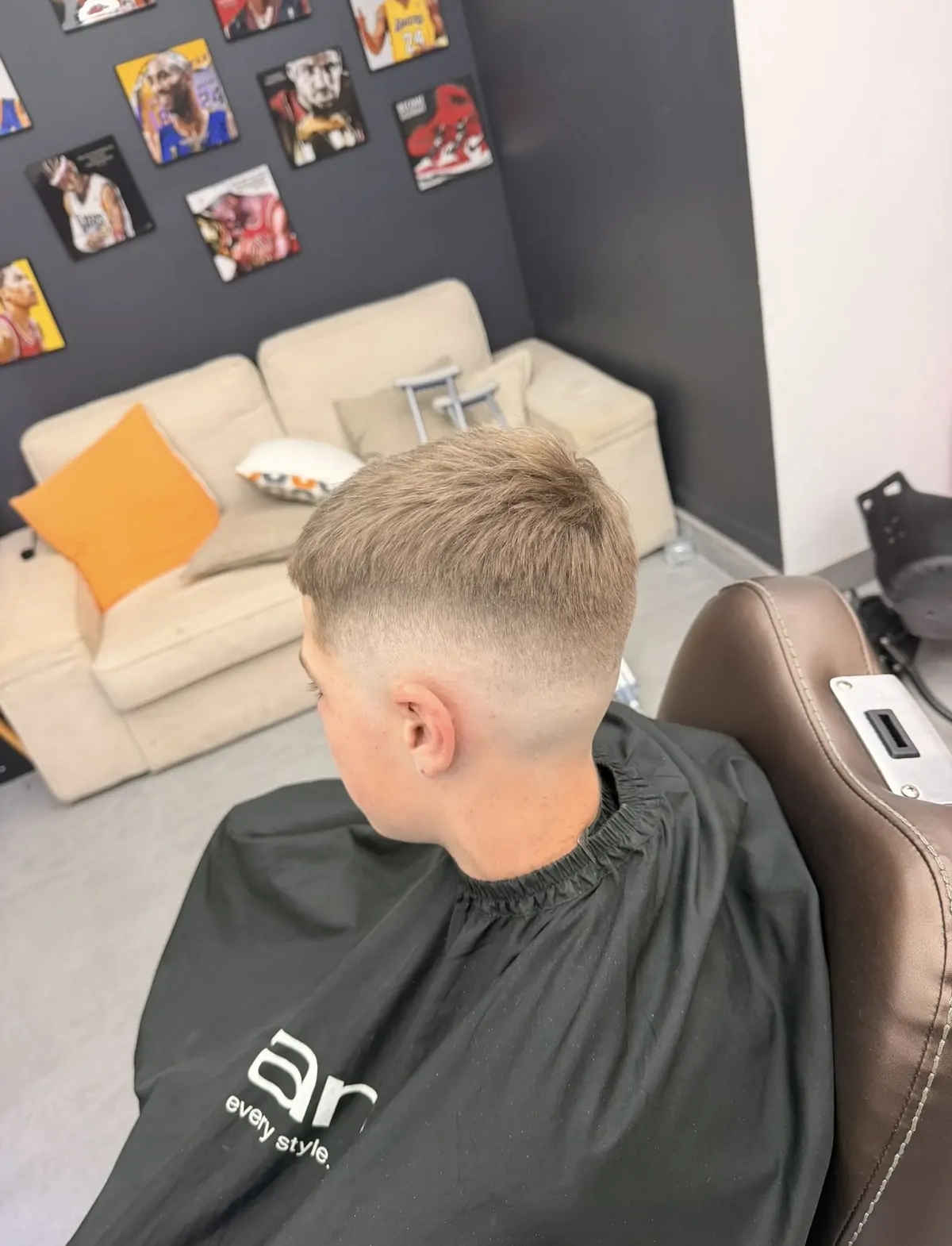
There are more types of fades than most people realise, and the names get used loosely enough that two barbers can picture different cuts from the same request. This guide sorts out the main ones: where each fade starts, how short it goes at the bottom, and what that means for you between cuts. If you already know you want one, the skin fades and tapers page covers prices and booking at Clipper Culture's studio in Glen Alpine.
Key Takeaways
- Two measurements define every fade: the height of the blend and the length it finishes on.
- A skin fade blends down to bare skin, while low, mid and high describe where the blend sits, not how short it ends.
- A taper only shortens the edges, so it grows out more softly than a full fade.
- Higher fades show more contrast and lose their sharpness sooner, because more of the head is cut close.
- Photos beat names when you book, since fade terms vary from one barber to the next.
How a fade works: height and depth
A fade is a gradual change from short hair at the bottom of the head to longer hair above it, blended with clipper guards and lever adjustments so there is no visible step between lengths. Every fade name you hear is answering one of two questions. The first is fade height: where on the head the shortest part starts to blend upward. The second is depth: how short that shortest part goes, from a light guard length right down to bare skin.
Keeping those two ideas apart clears up most of the confusion. A low skin fade and a high skin fade are both skin fades; they differ in height. A mid fade on a number one and a mid skin fade sit at the same height; they differ in depth. When a request mixes the two up, the cut that comes out of the chair can be quite different from the one you pictured.
The main types of fades by height
- Low fade: the blend starts just above the ear and follows the hairline around the back of the head. It is the most understated option and leaves plenty of length on the sides, which suits workplaces and dress codes that frown on bold contrast.
- Mid fade: the blend starts around the temple, roughly halfway between the ear and the top of the head. This is the middle ground, with visible contrast but not much exposed scalp.
- High fade: the blend climbs to the temple line or above, close to where the head starts to curve towards the crown. It gives the strongest contrast between the sides and the top, and pairs well with short crops, high-tops and textured styles.
Skin fade vs low fade: what is the difference?
This is the comparison people ask about most, and it is a slightly unfair one, because the two terms measure different things. A skin fade, also called a bald fade or zero fade, takes the shortest section down to the skin, usually finished with a foil shaver or a trimmer after the clippers. A low fade only tells you the blend starts low. So a low fade can be a skin fade, or it can stop at a number one or two and leave a soft shadow of hair at the bottom.
In practice, the choice usually comes down to two looks. A low fade that stops above the skin keeps a little shadow and grows out gradually. A skin fade, at any height, shows bare skin and looks its sharpest in the first days after the cut. The photo at the top of this post is a crop with a skin fade from the Clipper Culture chair: the bottom is taken to the skin and the blend climbs towards the temple.
One practical point for summer: once the sides are cut to the skin, that skin sees the sun in a way it did not before. Healthdirect's guidance on preventing sunburn recommends sun protection whenever the UV index is 3 or higher, including a hat that protects your face, head, neck and ears.
Every man deserves a cut finished to the same standard, every single time.
Know which fade you want? Choose a time on the booking page or call the studio.
Taper vs fade: which grows out better?
A taper and a fade both get shorter towards the bottom, and the words are often swapped. The usual distinction is coverage. A fade blends the whole of the back and sides, so the short section wraps all the way around the head. A classic taper keeps the change in length to the edges: the sideburns, around the ears and the neckline, with more length left on the sides above.
Because less hair is cut close, a taper grows out gently and tends to look tidy for longer after the cut. That makes it a sensible choice for longer hair, curly or textured tops, and anyone who would rather not book in often. A taper fade sits between the two: a taper that goes shorter, sometimes to the skin, at the temples and nape only.
Choosing your fade and asking for it
- Bring two or three photos of the fade you like, ideally showing the side and the back.
- Say where you want the blend to start, such as just above the ear, at the temple or higher, and whether you want skin at the bottom.
- Mention how you wear the top, since the fade should suit the length and shape above it.
- Think about upkeep: the higher and tighter the fade, the sooner it needs a tidy.
For more on describing a cut, the guide to barber terms covers guard numbers and common words, and the post on maintaining a fade explains how to keep the blend fresh between visits. At Clipper Culture, a Men's Fade (low, mid or high, including skin fades and tapers) is $40 and a High School Fade is $35, with the full list on the pricing page.
Frequently Asked Questions
Which type of fade is best for a first fade?
If you have never had a fade, a low or mid fade that stops short of the skin is a forgiving place to start. It gives a clear shape without exposing much skin, and it grows out without leaving a harsh line. You can go higher or tighter at the next visit once you have seen how the shape sits on your head and how quickly your hair grows back.
Is a burst fade a different type of fade?
Yes. A burst fade curves around the ear in a semicircle and leaves length at the back of the neck, rather than running in a level line around the head. Barbers often pair it with a mohawk, a textured top or a longer shape at the back. It describes a shape rather than a height, so it can be taken to the skin or left with a little length.
Can I get a fade with curly or textured hair?
Yes. Fades and tapers work well with curls, coils and afro-textured hair, and a tight fade under a fuller top shows off the texture. Texture changes how a blend sits and how a top shrinks as it dries, so it helps to show your barber how you normally wear it. There is more detail on the textured hair cuts page.
Can I add a beard trim to a fade?
Yes. A fade often looks sharper when the beard is blended into it, so the short hair at the sideburns runs into the beard rather than stopping abruptly. At Clipper Culture, a beard trim and line up is $15 and can be added to any cut, and a cut-throat shave with a hot towel can be added for $10.
Will a skin fade be allowed at school?
That depends on the school. Some uniform and grooming policies limit very short or high-contrast cuts, so check the policy before booking. A low fade on a short guard, or a taper, is often the safer middle ground. The kids and high school haircuts page explains the options for younger clients.
Picking the fade that fits your routine
Of all the types of fades, the best one is the one that suits how you live between cuts, not only how it looks on the day. If you want something that still looks deliberate a few weeks later, keep it low or choose a taper.
Clipper Culture is a private, appointment-only studio in Glen Alpine with one barber, Jonah Ataalla, and one client at a time, so there is room to settle the height and depth before the clippers come out. Appointments run seven days, including evenings and weekends, with live availability on the booking page.
To book a fade at the Glen Alpine studio, call Clipper Culture on 0415 990 995 or choose a time on the booking page.
Book the chair.
Private, timed appointments in Glen Alpine, NSW. After-hours and weekends welcome.