
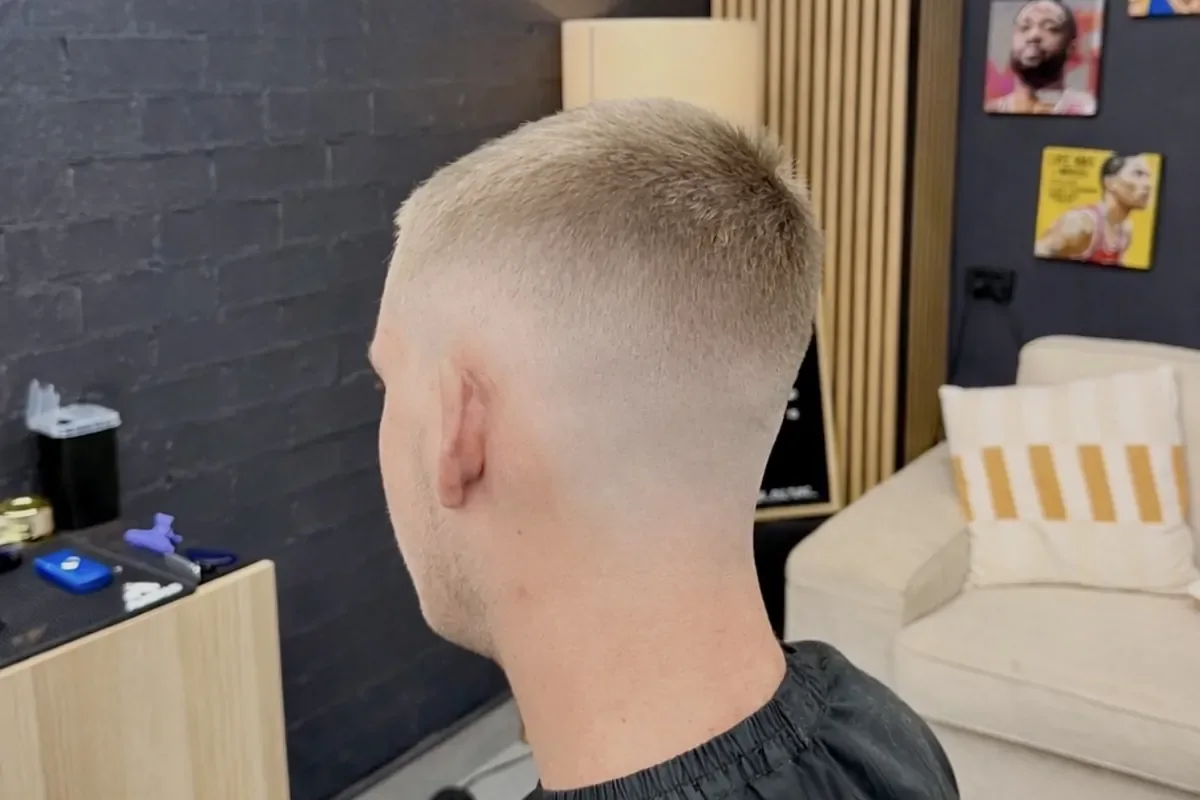
Learning how to ask a barber for a haircut is mostly about giving them something concrete to work from: a photo, a length, a point where the short part starts. Vague requests like "short on the sides, a bit off the top" leave a lot to interpretation. This guide covers what to bring, which words mean what, and the guard numbers worth knowing before your next men's haircut at Clipper Culture in Glen Alpine.
Key Takeaways
- Reference photos do more than any description, especially from the side and back.
- Guard numbers give a shared measurement for clipper length, though exact sizes vary between brands.
- Height and finish matter as much as length: the fade line and the edges shape the whole cut.
- Your routine counts: the way you style your hair and how often you book both shape the right cut.
- Speak up early, before and during the cut, while there is still length to work with.
Start with haircut reference photos
A photo removes most of the guesswork. Choose two or three, ideally of someone whose hair is similar in thickness and texture to yours, and include side and back views if you can find them. A cut that looks full on thick, straight hair will sit differently on fine or curly hair, so a similar texture matters more than the face in the picture.
Photos of your own hair help too. If you had a cut you liked, a picture taken a week or two afterwards shows what worked once it had grown in a little. A photo of a cut you did not like is just as useful, because it makes clear what to avoid. The Clipper Culture work portfolio shows real cuts from the chair if you want a starting point.
Barber terms worth knowing
These words come up in almost every barber's chair. Knowing them makes it easier to say what you want and to follow the questions you are asked.
- Fade: a gradual blend from short to long down the back and sides. Low, mid and high describe where the blend starts.
- Taper: a shorter blend kept to the sideburns, around the ears and at the neckline.
- Skin or bald: the shortest section is taken down to bare skin.
- Line up: sharp, defined edges along the hairline, temples and beard line, also called an edge up or shape up.
- Texture: cutting into the top so it sits loose and broken up rather than as one solid block.
- Blocked neckline: a straight, square edge at the nape. It looks crisp but shows regrowth sooner than a tapered neckline.
- Scissor over comb: cutting the sides with scissors instead of clippers, for a softer finish with more length.
- Weight line: the visible ridge where shorter sides meet a longer top. A fade removes it; some styles keep it on purpose.
Guard numbers explained
Clipper guards clip onto the blade and set how much hair is left behind. The numbers are a common shorthand, but the lengths vary a little between clipper brands, so treat these as approximate:
- No guard, often called a zero: about 1 millimetre or less, depending on the blade and lever.
- Number 0.5: about 1.5 millimetres.
- Number 1: about 3 millimetres.
- Number 1.5: about 4.5 millimetres.
- Number 2: about 6 millimetres.
- Number 3: about 10 millimetres.
- Number 4: about 13 millimetres.
- Numbers 5 to 8: about 16 to 25 millimetres, used for longer clipper cuts.
Most clippers also have a lever on the side that opens and closes the blade, adding a half step between guards. That is how a smooth blend is built: the barber works through guards and lever positions so no single line shows. "A two on the sides" is a clear request; "a two faded down to the skin" describes a fade with a start and an end length.
Photos ready? Choose a service and time on the booking page, or call the studio.
How to ask a barber for a haircut in four steps
- Show your photos and say what you like about them: the length on top, the fade, the texture or the shape of the fringe.
- Give the length for the sides and back, using a guard number, or a finger-width if you are unsure.
- Say where the short section should start, and how the neckline and edges should finish.
- Explain how you wear it: with or without product, pushed back, forward or to the side, and when you plan to come back.
The last step is the easiest to skip, and it matters as much as the photo. A style that needs product and a blow-dry every morning is the wrong choice for someone who wants to wash and go, however good it looks in the photo.
Things to mention before the clippers start
Anything about your hair or scalp that affects the cut is worth raising early: a cowlick at the crown, a scar you would rather keep covered, a part you always wear on one side. Flaking is common and nothing to feel awkward about. Healthdirect's page on dandruff notes that most people have it from time to time and that it is not caused by poor hygiene. It also advises seeing a doctor about a scalp that is painful, red, swollen or bleeding.
Mention it as well if you are growing your hair out. The cut can be shaped to grow towards a longer style, rather than being taken back to the same length every visit.
Frequently Asked Questions
What if I don't know which guard number I want?
Describe it another way: short enough that the scalp shows, about a finger-width, or simply point to a photo. A barber can start longer and go shorter, which is safer than the reverse because length cannot be put back. Asking to check the length before the next pass is a reasonable request, especially on a first visit.
Is it rude to ask for changes during a haircut?
No. It is far easier to adjust a cut while it is happening than to fix it afterwards. If the sides look shorter than you expected, or the fringe is heading somewhere you did not want, say so straight away. A clear, early comment saves both of you from a cut you would have to wait weeks to grow out.
Do barber terms mean the same thing everywhere?
Not always. Taper and fade are often swapped, and a short back and sides can mean anything from a scissor cut to a skin fade. That is why photos and guard numbers work better than names on their own. If a term matters to you, describe what you mean by it as well as saying the word.
How do I ask for a haircut for my son?
The same approach works: bring a photo, give a length and mention any school rules about short or high-contrast cuts. At Clipper Culture a Kids cut is $30 and a High School Fade is $35, and the kids haircuts page explains the options and how appointments work.
Can I tell the studio what style I want before the appointment?
Yes. An Instagram message to @clipper_culture_ is one of the ways to book, so you can send your reference photos with it. You can also book online through the booking page by choosing a service and a time, or call 0415 990 995. Bookings open up to 30 days ahead and close 2 hours before the time. Bring your reference photos on the day as well.
Clear words, better cuts
Once you know how to ask a barber for a haircut, a good cut becomes a shared plan rather than a guess. The more specific you are about length, shape and how you live with your hair, the less the result depends on luck, and the easier it is to repeat a cut you like.
At Clipper Culture, appointments are timed with space between bookings and only one client is in the studio at a time, so there is room to go through your photos before the cut begins.
To book a cut at the Glen Alpine studio, call Clipper Culture on 0415 990 995 or choose a time on the booking page.
Book the chair.
Private, timed appointments in Glen Alpine, NSW. After-hours and weekends welcome.