
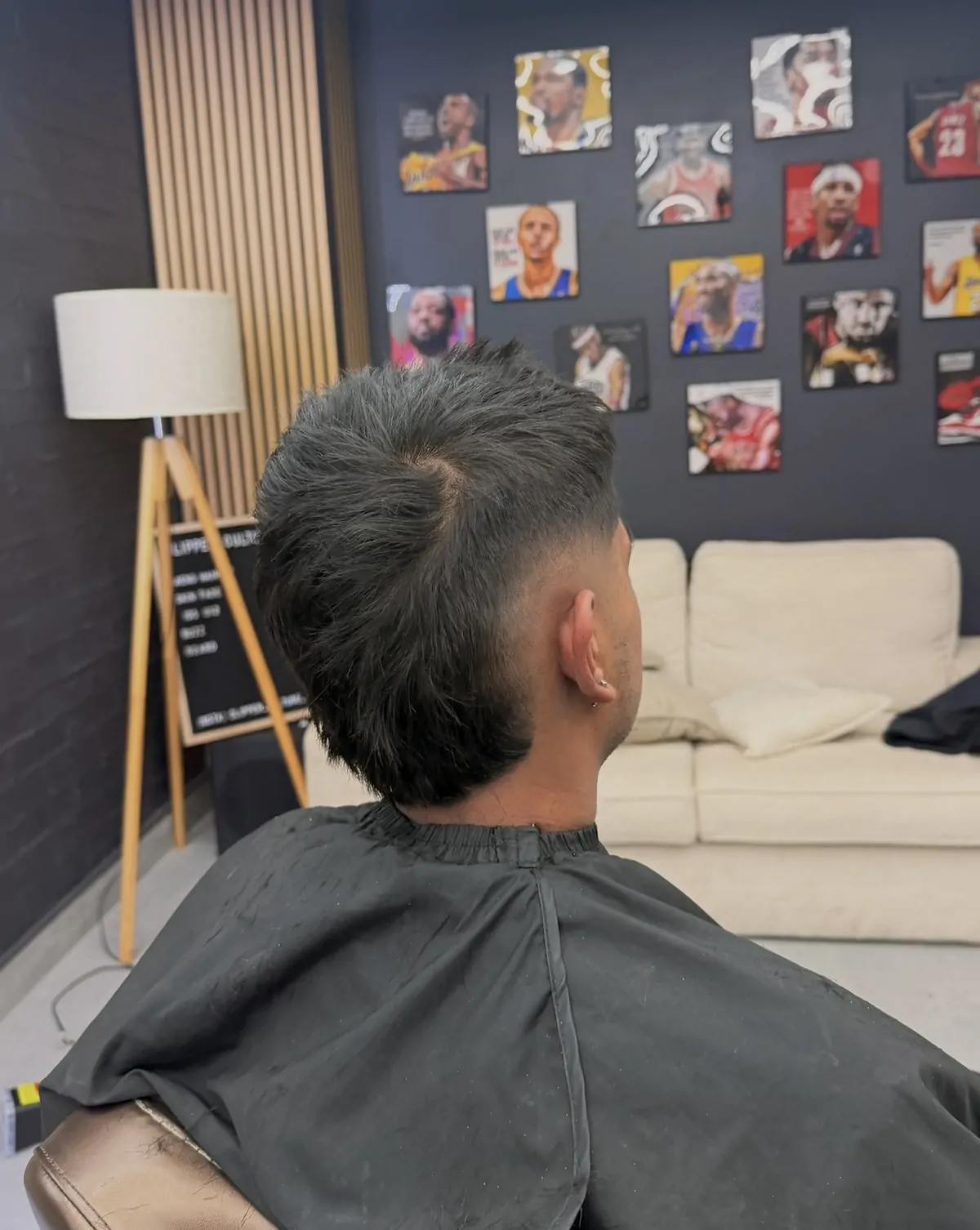
Pomade vs clay is a common question when buying a first styling product, and wax usually comes up in the same breath. All three hold hair in place, but they differ in shine, hold and how easily they wash out, and the wrong one can make a good cut look flat or greasy. Here is how they compare, and how to match a product to the cut you leave with after a men's haircut.
Key Takeaways
- Pomade gives shine and a smooth, combed finish, and water-based versions wash out easily.
- Clay gives a matte, textured finish with firm but flexible hold.
- Wax is the middle option: some shine, reworkable hold, and slower to wash out.
- Hair type matters as much as the style: fine hair usually suits light, matte products.
- Start small: a pea-sized amount is enough for most short styles, and you can always add more.
Pomade vs clay: the main differences
Pomade is the classic slick product. It comes in two broad types. Oil-based pomade stays workable for a long time and can be restyled through the day, but it is hard to wash out and can take several shampoos. Water-based pomade gives a similar shine and hold and rinses out with ordinary shampoo. Either way, pomade suits styles that are meant to look combed and polished: side parts, slick backs and pompadours.
Clay works the other way. It usually contains a natural clay such as bentonite or kaolin, which adds grip and a little bulk to each strand and leaves a dry, matte finish. That makes clay the go-to for textured crops, messy quiffs and any style that should look undone. Because it adds body rather than weight, clay also tends to suit fine hair better than a shiny product does.
The short version: pomade for shine and a neat line, clay for matte texture and volume.
Where wax fits in
Wax, often made with beeswax or a similar base, falls between pomade and clay. It has a light to medium shine and a pliable hold that lets you pull hair into defined pieces and push it back into place later. It works well on short to medium styles where you want separation without the dry look of clay. The trade-off is that wax can build up over a few days and usually needs a thorough wash to remove.
A few related products are worth knowing. Paste is a softer, easier-spreading cousin of wax and clay. Gel gives a firm, wet-look hold that dries hard. Cream is the lightest of all, giving soft control with almost no shine, and is popular for longer and curly hair.
Matching the product to your cut and hair type
- Skin fade or taper with a short textured top: clay or a matte paste.
- Side part, slick back or pompadour with length on top: pomade.
- Medium-length textured or messy styles: wax or paste.
- Curly or wavy hair: a light cream that defines curls without crunch. The guide to curly hair care goes into more detail.
- Fine or thinning hair: a light touch of matte clay, since shiny, heavy products clump strands together. See the guide to haircuts for thinning hair for more.
Ready for a cut worth styling? Choose a time on the booking page or call the studio.
Which is the best hair product for men?
There is no single best product, because the right one depends on your hair and how you want it to look. Three questions narrow it down quickly. Do you want shine or a matte finish? Do you want hair to stay put all day, or to move? And how often do you wash it? Something in between, with pieces you can rework, points to wax or paste. If you wash daily, a water-based product will make life easier.
Styling after a fresh cut, and looking after your scalp
A fresh cut often needs less product than you think, because the shape is already there. Warm a small amount between your palms until it softens, work it in from the back to the front so the fringe does not get the most, then finish with your fingers or a comb. If you liked how your hair looked when you left the chair, ask how it was styled so you can repeat it at home.
Product build-up is worth watching too. Healthdirect's self-care tips for dandruff include avoiding hair products that make your hair oily and products containing alcohol, which can dry out the scalp. Healthdirect also lists oils, creams and ointments that block hair follicles among the causes of folliculitis, and cosmetics among the possible causes of allergic contact dermatitis. If a product leaves your skin red, itchy or bumpy, stop using it and see your doctor if it does not settle.
Frequently Asked Questions
Can I mix clay and pomade?
Yes, and plenty of people do. A little clay worked in first adds grip and volume, and a small amount of pomade on top brings back some shine and smooths flyaways. Use less of each than you would on its own, warm them together in your palms, and adjust the ratio until the finish sits where you want it.
How do I wash out an oil-based product?
Apply shampoo to dry hair first, before wetting it, and work it through so it can break down the oil, then rinse and shampoo again. A clarifying shampoo helps if build-up has collected over several days. Water-based products avoid the problem, which is why many people switch to them for everyday wear.
Should I put product in wet or dry hair?
It depends on the product. Clay and matte paste work best in dry or almost dry hair, where they can grip each strand. Pomade, especially water-based, can go into damp hair for a smoother, slicker finish. Wax is easiest in dry hair. Towel-dry gently first so the product is not diluted by water.
Do I need a styling product at all?
Not always. Very short cuts such as buzz cuts and tight crops look good straight out of the shower, and some textured tops sit well with nothing in them. Product earns its place when you want a specific shape, more hold or a particular finish. If your cut looks right without it, there is no reason to add any.
Start simple and adjust
Once the pomade vs clay question is settled for your cut, most men end up with one product they use every day and another for when they want something different. Start with the one that matches your cut and finish, use less than you think, and change only one thing at a time so you can tell what worked.
A product can only style the shape that is already there, so the cut comes first. Live times for the Glen Alpine studio are on the booking page.
To book a cut at the Glen Alpine studio, call Clipper Culture on 0415 990 995 or choose a time on the booking page.
Book the chair.
Private, timed appointments in Glen Alpine, NSW. After-hours and weekends welcome.