
Key Takeaways
- Barbershops once served as vital social hubs where men gathered, talked, and broke into song.
- Barbershop music's four-part, a cappella harmony grew out of these informal singing sessions.
- The name "barbershop music" reflects its real origins inside these community gathering places across Australia and beyond.
Ever wondered why that classic vocal harmony style is called "barbershop music"? It's a fair question, especially given how different the sound is from the chatter and clipper buzz you'd hear in a modern barbershop. The answer is rooted in history and the unusual social role barbershops once played.
Before radio, television, and easy recording technology, barbershops were more than places for a trim and a shave. They were busy community centres, full of conversation, news, and music. At Clipper Culture in Glen Alpine, NSW, we appreciate the rich heritage of the barbering craft, and part of that heritage is the story behind barbershop music.
The Barbershop as a Social Hub
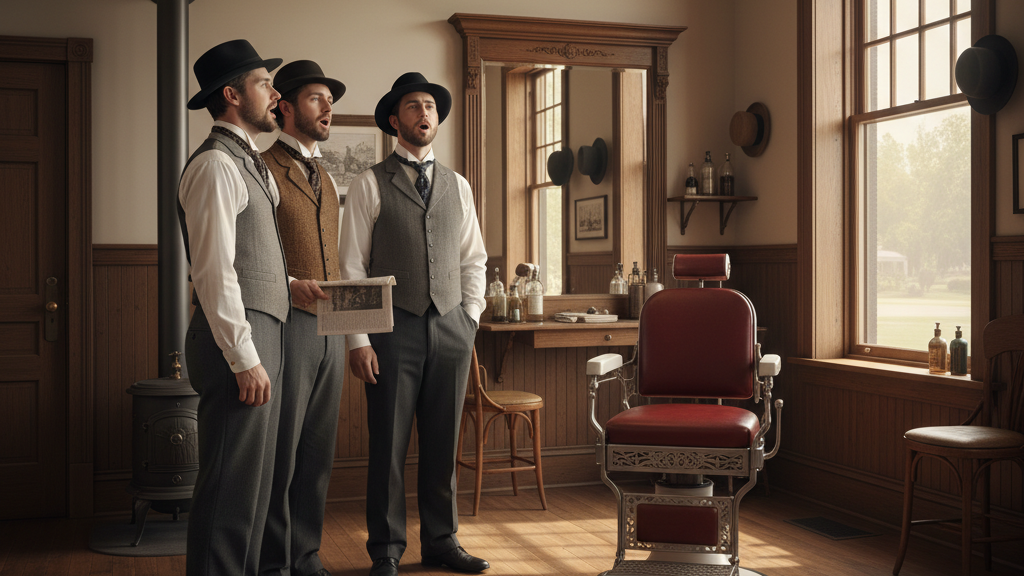
In the late 19th and early 20th centuries, particularly in America, the barbershop was a central gathering place for men. It was a spot to catch up on local gossip, talk politics, read the paper, and have a yarn. These shops offered a welcoming atmosphere where men could relax while waiting for their turn in the chair.
More Than Just a Trim
Picture a time when public entertainment was limited. Men would linger in barbershops not just for the services, but for the company. They'd swap stories, play checkers, and sometimes someone would start singing. That informal environment encouraged spontaneous music-making and gave a natural stage to impromptu vocal performances.
The barbershop became a communal space where harmony could thrive. It wasn't about formal concerts or trained choirs; it was about ordinary blokes enjoying themselves and making music together. This casual setting was crucial to the development of what we now know as barbershop music, a truly unique vocal art form.
Spontaneous Harmony and Community
Waiting for a haircut or a shave naturally invited these impromptu singing sessions. A customer might hum a tune, another would join with a harmony, and soon a small group would be creating a rich, unaccompanied sound. This organic way of forming vocal groups, often without any written arrangement, is a hallmark of early barbershop music.
These informal groups, even then known as "barbershop quartets," would gather around a piano or simply stand together, blending their voices. The shared experience of making music reinforced the strong sense of community in these shops. It was a democratic form of entertainment, open to anyone with a voice and a love for harmony.
The Birth of a Unique Sound
Barbershop music is defined by its a cappella (unaccompanied) four-part harmony. This sound didn't appear out of nowhere; it evolved over time, heavily shaped by African American musical traditions and the improvisational spirit of the barbershop. It's a style that prizes close harmony and "ringing chords."
African American Roots and Influence
Many music historians credit African American communities with pioneering the barbershop style. In the late 19th century, particularly after the Civil War, many African American men found work as barbers. Their shops became centres for social life and musical expression, where a distinctive vocal tradition started to take shape, often built on improvised harmonies and a strong emphasis on vocal blending.
The rich vocal traditions of spirituals, gospel, and folk songs shaped the harmonic language of early barbershop. These influences helped form the intricate, close-harmony voicings that are central to the style. The barbershop setting gave these musical elements a unique crucible to combine and grow into something new.
The Art of Tagging and "Ringing Chords"
One of the most thrilling parts of barbershop music is the "ringing chord" – a phenomenon where the overtones from perfectly tuned voices create a perceived fifth voice. This acoustic magic shows the precision and blend the style demands. Early barbershop singers honed the skill through constant practice and improvisation.
Another key element is the "tag," a short, often climactic ending to a song, usually sung in a slower tempo with rich, sustained harmonies. Tags often feature complex chord progressions and are designed to leave the audience with a memorable, emotionally resonant sound. The ability to improvise and create these tags on the fly was a prized skill among barbershop singers.
The Four Voices of Barbershop Harmony
At its heart, barbershop music is defined by four distinct vocal parts, each playing a crucial role in creating the full, resonant sound. Unlike many other four-part vocal traditions, the lead voice isn't always the highest, and the baritone often fills in the harmony rather than following a strict melody line.
Lead, Tenor, Baritone, Bass
- Lead: Sings the melody, usually in the second tenor or baritone range. The lead is the anchor of the quartet, around whom the other voices build their harmonies.
- Tenor: Sings the highest harmony part, typically above the lead. The tenor's role is to add brightness and sparkle to the chord, often providing the highest note.
- Baritone: Sings the harmony part that often sits below the lead but can weave above and below, filling in the missing notes of the chord. The baritone is arguably the most flexible and challenging part, demanding a keen ear for harmony.
- Bass: Sings the lowest harmony part, providing the foundation and depth for the entire chord. The bass grounds the harmony and adds richness to the overall sound.
This arrangement of voices allows for the tight, close harmonies that produce the characteristic "ringing" sound. Each part is essential, and losing any one voice diminishes the overall effect. It's a true team effort, where every singer contributes equally to the final product.
The Importance of A Cappella
The a cappella nature of barbershop music isn't just tradition; it's fundamental to the sound. Without instrumental backing, singers rely entirely on their voices for pitch, rhythm, and dynamics. That forces a level of vocal blend and precision rarely found in other musical forms.
The human voice, perfectly tuned and blended, creates a powerful and emotive sound that can hold an audience. With no instruments to lean on, the nuances of each voice, the subtle inflections, and the emotional delivery come to the front. This raw, unfiltered vocal expression is a key part of barbershop's enduring appeal.
The barbershop wasn't just a place for a haircut; it was a sanctuary of sound, where the spontaneous combustion of four voices created a harmony so rich it seemed to vibrate with the very soul of community.
The Golden Age and Decline
Barbershop music enjoyed huge popularity in the late 19th and early 20th centuries, becoming a cherished form of entertainment in many communities. Sheet music sales soared, and amateur quartets could be found singing on street corners, in parks, and, of course, in barbershops.
Popularity and Minstrel Shows
During its golden age, barbershop quartets were a staple of vaudeville and minstrel shows, which cemented their place in popular culture. While minstrelsy itself has a deeply problematic and racist history, it did play a role in spreading barbershop music to a wider audience, often in caricatured forms. That exposure helped embed the sound into the public consciousness.
The simple, heartfelt melodies and accessible harmonies made barbershop music a favourite for both performers and listeners. Anyone could enjoy it, regardless of musical training. That broad appeal made it a beloved American pastime, a tradition that crossed many social divides.
The Rise of Recorded Music and New Genres
As the 20th century rolled on, new genres and technologies appeared. Jazz, blues, and later rock and roll, along with the spread of phonographs and radio, started to shift public taste. People no longer needed to make their own music for entertainment; they could listen to professional recordings.
That cultural shift led to a decline in the mainstream popularity of barbershop music. It never disappeared completely, but it moved from a widespread popular form to a more niche interest. The informal, spontaneous nature that had birthed it struggled to compete with the polished productions of the new music industry.
Ready for a Signature Cut?
Experience the precision and attention to detail at Clipper Culture, where every trim is a masterpiece.
Revival and Modern Barbershop
Despite the slide in mainstream appeal, barbershop music had a major revival in the mid-20th century. Dedicated enthusiasts saw the cultural and musical value of the style and worked hard to preserve and promote it. That movement made sure the unique harmonies and traditions of barbershop would keep thriving.
Preserving the Tradition
The Society for the Preservation and Encouragement of Barbershop Quartet Singing in America (SPEBSQSA), now known as the Barbershop Harmony Society (BHS), was founded in 1938. This organisation, along with others like Sweet Adelines International (for women's barbershop) and Barbershop Harmony Australia, has been instrumental in formalising the style, running competitions, and teaching new generations of singers.
These societies provide resources, education, and performance opportunities, keeping the art form vibrant. They encourage both recreational singing and competitive excellence, allowing barbershop music to evolve while staying true to its roots. That dedicated effort has turned barbershop from a fading memory into a living tradition.
Global Reach Today
Today, barbershop music is enjoyed and performed by thousands of people worldwide. It has a strong presence in Australia, Europe, and Asia, with international competitions showcasing incredible talent. The style has also taken on modern influences, with contemporary arrangements of popular songs and original compositions adding new dimensions to the repertoire.
Modern barbershop performers keep pushing the boundaries of the art form, trying new sounds while honouring the traditional elements. The global community of barbershop singers shows the lasting appeal of close-harmony, a cappella music and the joy of singing together. At Clipper Culture, we believe in celebrating traditions, much like the timeless craft of barbering itself.
Why the Name Stuck
So, why is it called barbershop music? The answer is simple and deeply historical. It's named after the very places where it was born and flourished: the barbershops. The name isn't just a quaint historical reference; it's a direct nod to its origins and the cultural setting that shaped it.
A Legacy of Community
The term "barbershop" became tied to this style of a cappella harmony because these shops were the main venues for its spontaneous creation and performance. It was here that men, waiting for their turn, would break into song, forming quartets on the spot and sharpening their harmonies through informal practice.
The name is a constant reminder of the communal spirit and informal nature of how the style began. It calls to mind a time when music was a more participatory, less mediated experience, woven into everyday social life. That legacy of community and shared musical joy sits at the heart of barbershop music's identity.
Authenticity in Naming
Unlike many musical genres named after their style (e.g. jazz, blues, rock), barbershop music is named after its geographical and social context. That naming choice underscores the authenticity of its origins. It wasn't a style invented in a studio or by a single composer; it grew organically out of the everyday interactions of ordinary people in a specific setting.
The name "barbershop music" is a tribute to those informal gatherings, the camaraderie, and the shared passion for vocal harmony that defined the barbershop experience of yesteryear. It's a name that perfectly captures the rich history and the lasting appeal of the sound.
The Enduring Charm of Barbershop Music
While the role of the modern barbershop, like Clipper Culture, has changed, the spirit of community and craftsmanship hasn't. We may not have impromptu quartets breaking into song, but we still aim to give every client in Glen Alpine, Campbelltown, and the wider Macarthur region a welcoming, precise, and enjoyable experience.
Connecting Generations Through Harmony
Barbershop music still connects generations, bridging past and present through its timeless harmonies. The style appeals to both young and old, offering a blend of nostalgia and contemporary charm. Many modern barbershop groups arrange popular songs in the classic style, introducing new audiences to the joy of close-harmony singing.
The lasting appeal comes from its ability to stir emotion, its intricate vocal arrangements, and the sheer joy of human voices blending in perfect unison. It's a reminder that some traditions, like a quality haircut or a beautiful song, simply never go out of style.
A Niche, But Passionate Following
Today, barbershop music thrives as a niche art form, backed by a passionate global community. From local choruses in Australia to international competitions, the dedication to this vocal style is clear. It's a testament to the power of harmony and the joy of making music together.
The legacy of barbershop music, born in the bustling social centres of the past, still resonates. It's a lovely example of how culture, community, and creativity can intertwine to make something truly special and lasting. Just as a great haircut leaves a lasting impression, so too does the rich, ringing sound of barbershop harmony.
Frequently Asked Questions
What makes barbershop music unique?
Barbershop music is unique because of its a cappella (unaccompanied) four-part harmony, which creates a distinctive "ringing chord" effect. It emphasises close harmony, precise tuning, and a blend of four specific voice parts: lead (melody), tenor (highest harmony), baritone (fills in chords), and bass (lowest harmony).
Is barbershop music still popular today?
It's not as mainstream as it was in its golden age, but barbershop music has a strong and passionate following worldwide. Groups like the Barbershop Harmony Society and Sweet Adelines International promote and preserve the art form through education, competitions, and performances, keeping it healthy.
Where did barbershop music originate?
Barbershop music originated in the late 19th and early 20th centuries in American barbershops, particularly within African American communities. These shops served as social centres where men would gather and spontaneously sing together, developing the unique four-part harmony style.
Can women sing barbershop music?
Absolutely. While it's historically associated with men, women have embraced barbershop music and have their own thriving organisations, most notably Sweet Adelines International. There are also mixed-voice barbershop groups, showing the inclusivity of the art form today.
What are the four parts in barbershop harmony?
The four vocal parts in barbershop harmony are Lead (sings the melody), Tenor (sings the highest harmony), Baritone (fills in the chords, often below or around the lead), and Bass (sings the lowest harmony, providing the foundation). Each part is crucial for creating the full, resonant sound.
Visit Clipper Culture Today
Experience the blend of tradition and modern precision at Clipper Culture in Glen Alpine, your local destination for premium men's haircuts and grooming.
Book the chair.
Private, timed appointments in Glen Alpine, NSW — after-hours and weekends welcome.