
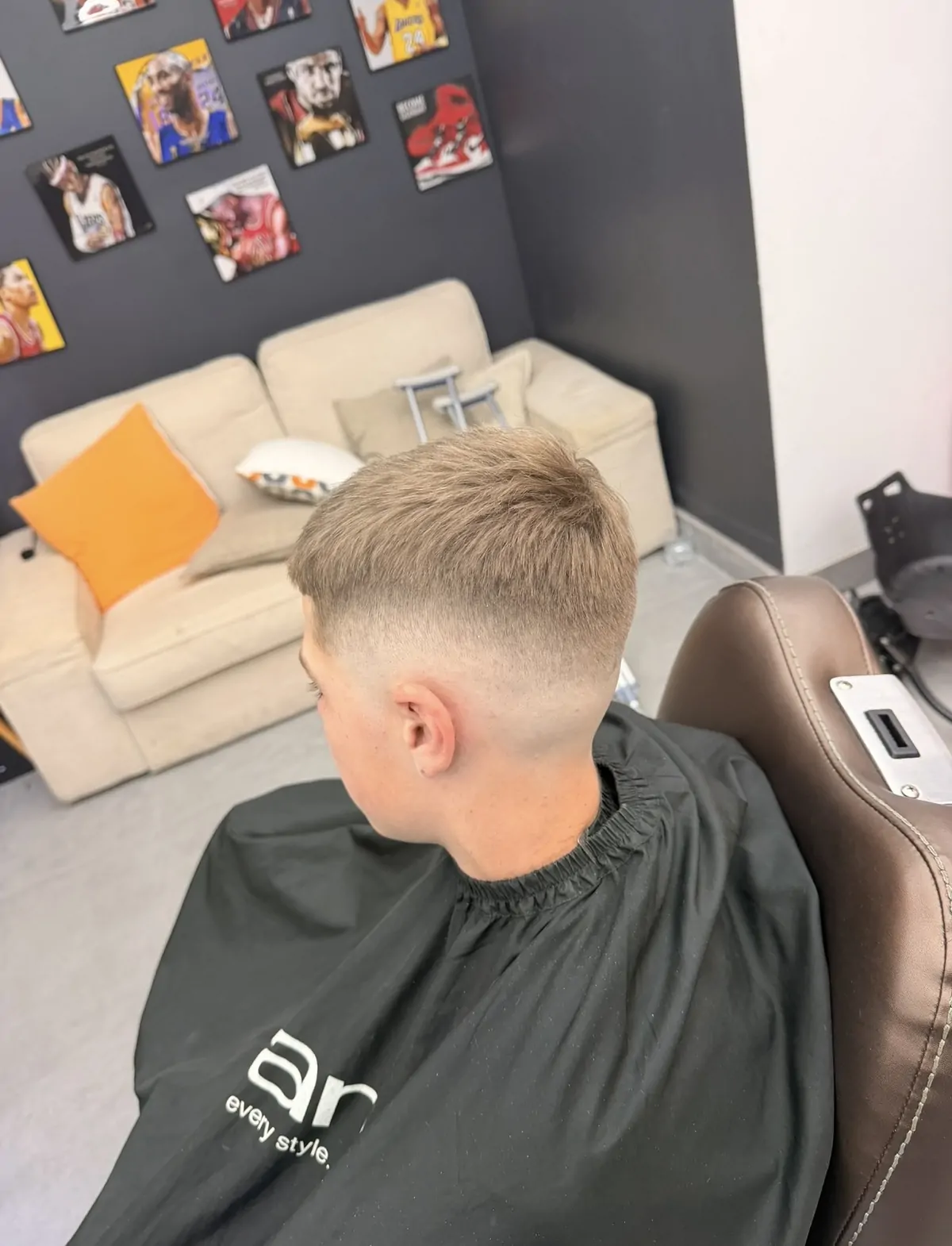
Everyone asks for a fade. Almost no one can describe the one they actually want. "Low", "mid", "skin", "taper": the words get thrown around, but the difference between a cut that looks sharp on day one and one that still looks intentional three weeks later comes down to a few details most chairs rush past.
Here's how a clean fade is actually built, and what to look for next time you're in the chair.
A clean fade haircut is a gradient, not a line
A fade is a controlled transition from skin (or near-skin) up to your longer length, with no visible "step" where one guard ends and the next begins. The whole craft is in that blend, working through multiple clipper guards and lever positions so the eye never catches a hard edge. When people say a fade looks "blurry", what they usually mean is the opposite: the blend got muddy because the transition wasn't cleaned up with detail work.
Where the fade starts changes everything
The single biggest decision is the height of the fade line, where the skin work begins relative to your head:
- Low fade: starts just above the ear and hairline. Subtle, professional, ages the slowest.
- Mid fade: begins around the temple. The all-rounder.
- High fade: climbs toward the crown for maximum contrast and a bolder finish.
None of these is "better": they suit different head shapes, hair types and how much upkeep you're willing to commit to. A good barber will ask about your routine before reaching for the clippers, not after.
The detail that separates sharp from average
Two things do most of the heavy lifting once the blend is down:
- The line-up. Crisp, square edges along the hairline and around the ears give the whole cut its frame. This is where a steady hand shows.
- The finish. A hot-towel cut-throat shave around the edges takes a good fade to a great one: clean skin against clean lines.
Making it last
A fade has the shortest shelf life of any cut, because the lowest, tightest section grows out first and the contrast softens fast. To stretch it:
- Book your refresh before the blend softens: past that point, the fade you paid for is gone.
- Keep the hairline tidy at home if you can, but leave the blend itself to the chair.
- Tell your barber what you didn't like last time. Fades are a conversation, not a lottery.
If you're in the Macarthur region and want a fade that's actually built, not rushed, that's the whole point of a private, timed chair. Browse the full service menu, or if you're nearby, here's the Campbelltown rundown. When you're ready, book the chair and we'll dial in the exact fade that suits you.
Book the chair.
Private, timed appointments in Glen Alpine, NSW — after-hours and weekends welcome.